Monthly Archives: January 2008

Napa Valley’s Route 128 Road Trip

For those of you in search of a solid road trip that doesn’t last more than a day (unless you want it to), I believe I may be of assistance. This trip covers the best of the Napa Valley as well as the surrounding mountains and Lake Berryessa. I first did the following trip with Siena and have now perfected it with Kira and Elle.

I’ll give the directions first to get the technical stuff out of the way and will then proceed to the pictures and analysis. The directions I am giving are for an approach from the east which is what I would recommend (even if you’re coming up from the Bay Area, it’s only a few minutes more to start with Route 128), but if one wishes to enter through Napa, simply reverse my directions.

1) Starting on Interstate 80 West, you’ll take the 505 North exit

2) After about 10 miles or so, you’ll take the exit for Route 128 East. Now, I know we’re going west, but there is no sign for 128 West. You just take the Route 128 East exit and turn left at the stop sign instead of right.

3) Follow Route 128 until it runs into Silverado Trail. Cut across the valley on Rutherford Road (within viewing distance of the stop sign on Route 128) until you get to Highway 29.

4) Turn right on Highway 29 and follow it up to Calistoga and then turn right on Lincoln Avenue to cut across Calistoga.

5) Lincoln Avenue runs into Silverado Trail on which you will make another right turn. Silverado Trail is prettier than Highway 29 and has less traffic.

6) You’ll follow Silverado Trail down the other side of the valley until you get to Trancas Street in Napa where you will turn right.

7) Follow Trancas Street across Napa and then turn left to get back onto 29/12.

Lastly, follow 29/12 to Interstate 80 (East or West depending on where you wish to go next).

Okay…

Now, if you’re sick of the traffic on I-80, things will immediately improve once you turn onto 505 North:

Shortly after passing through Winters, you’ll come across the Lake Berryessa dam:

And a sign letting you know that, yes, you are now in Napa County:

Now, the Lake Berryessa dam is actually famous for its spillway. No, seriously. It’s called the “bathtub drain” and is quite unique. The water level was very low when we went, so I took this picture of a picture to give you an idea of what the well-known “bathtub drain” is all about:

Here’s a view of the canyon overlooking the dam:

Unless you’re the Zodiac killer (who prowled around Lake Berryessa) or you’re into water skiing, there isn’t much to recommend Lake Berryessa – it’s a man-made reservoir and they are never attractive. However, it is worth stopping at the dam to check it out.

Route 128 starts getting pretty as soon as you leave Winters, but it really comes into stride after the dam. Oaks line the road and Spanish Moss covers everything. Also, unless you go on the 4th of July, the road is blissfully free of traffic:

Here Kira displays a closeup of Spanish Moss and demonstrates its functionality as a fashion accessory or a cheap fix for balding men:

The following are pictures I took along the rest of Route 128 as it makes its way toward the Napa Valley. I apologize for the lack of crispness in some of these pictures, but hey, I was driving… I think they still give a good sense of the area.

Now, for most of you, this is what it’s really all about – getting to the Napa Valley and boozing it up… This is the first winery you will encounter as you arrive in the Napa Valley and turn off of Route 128.

Not that the scenery is over though… We stopped to take these pictures on Rutherford Road:

Now, I’m not a big wine guy, but I am a complete cheese whore. Fortunately, many of the wineries also offer a fine selection of cheeses and other non-wine items… This was taken at the V. Sattui Winery:

One of the V. Sattui buildings:

The normal tasting room at V. Sattui was closed for remodeling when we went. So, a temporary tasting room was set up in the wine cellar. V. Sattui was quite apologetic about this “inconvenience”, but I was pumped to go down in the wine cellar:

More wine cellar scenes:

There is a requirement which compels every winery to have at least one cat. Fortunately, this one is in compliance:

All of the wineries show off the celebrities that have visited… V. Sattui is no exception:

I think we had more fun in the expansive gardens of the next winery than we did indoors drinking the wine. See, there’s plenty to do if you’re not into wine:

Kira found some olive trees:

And some lemon trees:

I found a fountain:

And this balancing rock:

Which I assumed was bolted to the rock beneath it. However, I discovered I was mistaken when I gently pushed the balancing rock and it promptly fell over on my hand. Fortunately, after several minutes I was able to balance the rock again. I left the scene quickly though in case it fell over again…

Again, even though we were in country thick with wineries, there was still plenty of scenery:

On the way out of Calistoga, we felt it necessary to stop and assess the Calistoga water truck statue:

Here the girls are, ummmmm, riding a pole on the Calistoga truck. Actually, I’ll just refrain from any further comment:

Plenty of wineries along Silverado Trail as well… Kira’s a happy drunk, fortunately:

And easily transfixed by the pour:

So, that’s a sampling of what’s available on this trip. If you have more time or wish to extend your trip, check out Jack London State Park or head south of Fairfield and check out Bird’s Landing and eat at Foster’s Bighorn in Rio Vista.

Fancy A Boob Job?

So, a good friend of mine recently got a boob job. I hung out with her a few days after the surgery and, of course, I had to take pictures for your benefit, dear reader… Sure makes you want to get a set of your own, huh?

Inspiration or Destruction?

I find the following video terribly inspiring for some reason…

Now the details are as follows: This took place in the U.K. and the Jeep failed its MOT (the equivalent of a smog test in the U.S.) The cost of the repairs was more than it was worth, so instead of taking it to get crushed, it was thrashed.

As good fortune would seem to have it, my parents just had a 1984 Nissan truck fail its smog test. Destroying it for the benefit of my readers seems an obvious choice to me. I ran this idea by my father and he was surprisingly receptive to it. So, we’ll see what happens…

Highlights from Bodies Revealed

So, the other day Valerie and I went and checked out the Bodies Revealed exhibit which is temporarily nearby. The official policy is that no photography is allowed, but do you think I would allow that to stand in the way of bringing a good story to you, dear readers? Of course not. However, this policy (and they do strictly enforce it with roaming patrols) certainly limited the number of pictures I was able to sneak. Nevertheless…

The Running Man:

I think his profile is a little more flattering to him…

Here’s a typical Bodies Revealed scene:

Now, some things are hard to ignore…

And lacking other points of reference, Valerie and I were soon speculating as to the ethnicity of the various figures on display…

“Hmmmmm, fairly likely this guy was Asian.”

“Well, the one over here was definitely black.”

We were curious about the preponderance of male bodies on display and so I asked one of the staff members the reason for this. She informed me that by a margin of more than 20 to 1, that it is men that donate their bodies to science. She said that this issue had been researched and women are very protective of how their bodies are used and are sensitive about being put on display. Come on girls, lighten up. You’ll be dead and therefore incapable of caring…

I thought these blood vessels of the liver were attractive in an artistic sort of way:

Apparently, a fetus is translucent and we were informed that a newborn remains this way as well for up to a week after birth. So, if you stumble across an infant less than a week old somewhere, hold a flashlight underneath its hand. You’ll get quite a display. The fetus here was lit from the bottom, but all of those colors are natural. No dyes were used:

Why does anyone smoke these days? Heroin is better for you:

This heart was filled with dyed plastics to display the various components:

The circulatory system of this individual was injected with a transparent plastic and then (carefully) removed:

Rapid Fire – Experiment # 11

Eat your words

A man’s running his eye over a menu in a restaurant when his attractive waitress asks him what he’d fancy. “A quickie, please.” “Sir,” she says, “I’ll ask you one more time, is there anything that takes your fancy?” “Yes,” says the man again. “A quickie.” Outraged she slaps him across the face and storms back across the restaurant in a huff. “Mate,” says the guy on the next table, “it’s pronounced ‘quiche’.”

Major Narco Trafficking Routes and Crop Areas (CIA, 2000)

Click on the map for better detail:

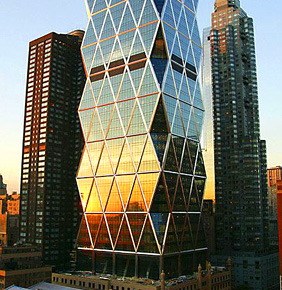
Hearst Corp.

When William Randolph Hearst died in 1951, he did not leave any of his five sons in charge of the media empire he had shaped out of the mining and real estate fortune left to him.

Instead, Hearst left his holdings under the stewardship of professional managers: Hearst family members were given five of the thirteen seats on the board of trustees running Hearst Corp.

Today, Hearst owns or manages 27 TV stations, 16 magazines, 12 daily newspapers, including the San Francisco Chronicle, and several cable enterprises.

It also has huge real estate holdings, including timber and agricultural operations in California and commercial properties in New York City and San Francisco. Forbes estimated the corporation’s 1999 revenues at $4.4 billion.

Junkie Ramblings – Part 2 (Autobiography)

Growing up with an English mother and a Californian father gave me an appreciation for all that is international – starting in my own home.

My father always had a curious nature, so a career in journalism was a natural for him. He worked as a newspaper reporter, photographer, and copy editor who would often take me out with him on interviews or photo shoots. Similarly, meeting and getting to know people from all over the world and being exposed to new experiences was always very important to my mother. When she was still pregnant with me, my mother went with my father when he interviewed a family who rescued rattlesnakes and gave the snakes (with poison sacs intact) the run of their home. My mother told me of having a pair of rattlesnakes crawl up onto her lap and carefully petting them.

My mother made sure that I was well-traveled (she had me flying on an airplane when I was less than a month old), and I was in elementary school the first time she took me to Europe. She bought an MG convertible, and we spent summers traipsing around the continent, Britain and Ireland, exploring museums, art galleries and whatever else took her fancy. My mother is well-educated and would entertain me with tales of monarchies long gone or impromptu lectures on Greek mythology or international politics. Along the way I picked up a smattering of German, and continued my travels, eventually on my own. I loved it all. Training for a future nine-to-five job in suburban America this was not.

After graduating from high school, I attended Sierra College. An excellent community college, it was somewhat unusual for a community college in that it had dormitory facilities, so attracted students from all over the world who wanted to live and study in America. Our dorm had a decidedly international flavor, and I remain friends to this day with some of my fellow students from other countries. After completing my basic studies, I transferred to the University of California at Davis to major in International Relations.

An internship in London at the investment bank Brown Brothers Harriman was a defining moment for me. I had visited London before, but now I was living and working in London. I felt like a local when I was able to answer questions or give directions to tourists who came up to me in Tube stations or on the street. In my job, I was exposed daily to the frenetic energy of the international financial markets. There are few other lines of work that involve such endless, unrelenting uncertainty as investing. I found myself interacting with many of the global participants I would read about in the press. I would be fielding a phone call from a Goldman Sachs employee in Zurich one moment and from a prominent financier calling from his villa in Monaco the next. I was in the capital of the world and an integral part of the process there. I decided that I had to return to London to get my advanced educational degree.

Unfortunately for me, I graduated with my bachelor’s degree in International Relations in 2002 right into the post-tech-bubble and post-9/11 economic downturn. After graduating, I accepted a position with Liberty Mutual, a large, Boston-based insurance firm. I rose through the ranks to become one of the highest ranked managers in an office of several hundred employees, dedicated to handling the most complex and disastrous claims from large customers such as Sears or UPS – leading a team of attorneys and field investigators and fending off giant corporate clients hyper-sensitive about how their millions were being spent. I gave the job my best, but I was miserable.

It wasn’t the long hours or death threats from disgruntled litigants (one claim I handled, for example, involved members of the Russian mafia – my name was on the stationery, I must be the one to blame, right?); it was the thrumming frustration that corporate life engendered in me, even in a relatively unorthodox position as my own. I had no way of knowing if I would ever find a way to escape. I searched the faces of those around me in the office for solace and saw that most of my colleagues were diminished and oppressed by their work, which they disliked as much as they feared losing. Everyone was settling for the humdrum and embracing the routine, and I felt pressured to do the same.

I tried to maintain my connection to distant continents. I still traveled whenever possible and I took an international finance course at the University of California, Berkeley as part of an International Business program. However, just as I finished the course, the program was cut.

As time passed my thoughts focused on a truth as stark and chilling as the deepening winter around me: our days are numbered and our time runs out. Whether we succeed or fail in our professional or personal lives, our time runs out. I believe that in life, as in film or literature, there are climaxes, decisive moments that resolve our doubts and answer our questions, and that determine who we are and what we are worth. It was during this stretch of musing and searching that my fiancé broke up with me. Unexpectedly unattached, without debt or obligations, I suddenly found myself free. Rather than viewing this as a tragedy, I looked upon it as an opportunity. I drafted a “to do before I die” list of everything I wanted to achieve. Near the top of that list was continuing my education in my favorite city, a goal I had always wanted to attain. To pursue such an education would enable me to work and have a career in the global environment. Since then, it has been at the forefront of my mind.

I left the insurance company, determined to pursue this educational goal and not to allow myself to stagnate. I would like to start graduate school in the fall of 2008. In the meantime, I have been traveling again, and having as many adventures as possible.

Whether it be living in a primitive fishing village in Brazil, traveling through the Middle East (Pakistan, Afghanistan and Iran) or visiting sub-Saharan Africa, learning to fly an airplane, hanging out with the homeless who congregate in the local library or simply continuing a hike to see what is around the next bend, my interest in travel and exploring has taken me in a number of directions and brought me to a number of amazing people and experiences…

The Japan Airlines Flight 123 (JAL 123) Disaster

How many people are familiar with the story of Japan Airlines Flight 123? Not many. Yet, the August 12, 1985 accident remains the worst single-aircraft disaster in history, and the second-worst aviation accident of all time, second only to the Tenerife disaster. All 15 crew members and 505 out of 509 passengers died, resulting in a total of 520 deaths.

Below is a picture of the doomed airplane that was taken in 1984:

The Boeing 747-SR46 took off from Tokyo International Airport in Ōta, Tokyo, Japan at 6:12 p.m. About 12 minutes after takeoff, as the aircraft reached cruising altitude over Sagami Bay, the rear pressure bulkhead failed, causing an explosive decompression at the rear of the fuselage which tore the vertical stabilizer from the aircraft and severed the lines of all four of the aircraft’s hydraulic systems.

The pilots, including Captain Masami Takahama, set their transponder to broadcast a distress signal to air traffic control in Tokyo, who directed the aircraft to descend and gave it heading vectors for an emergency landing. Continued control problems required them to first request vectors back to Haneda, then to Yokota (a U.S. military air base), then back to Haneda again as the aircraft wandered uncontrollably.

With the loss of all control surfaces, the aircraft began to oscillate up and down in what is known as a phugoid cycle, a flight mode typical of accidents that disable an aircraft’s controls. After descending to 13,500 feet, the pilots reported that the aircraft was uncontrollable. It flew over the Izu Peninsula, headed for the Pacific Ocean, then turned back toward the shore and descended to below 7,000 feet before the pilots managed to return to a climb. The aircraft reached an altitude of 13,000 feet before entering a wild descent into the mountains and disappearing from radar at 6:56 p.m. and 6,800 feet. During the oscillations that preceded the crash, the pilots managed a small measure of control by using engine thrust. The final moments of the plane occurred when it hit a mountain as a result of this loss of control, flipped, and landed on its back.

Below is a transcript of the final seconds captured on the flight data recorder:

18:55:55 CA: Power, power.
?: URV
CA: Flap.
FO: I am retracting it.
CA: URV
18:56:05 CA: Raise nose.
CA: Raise nose.
CA: Power.
18:56:14 GPWS: Sink rate, pull up, pull up, pull up, pull up
18:56:19 CA: URV
GPWS: Pull up pull up
18:56:23 (sound of collision with first peak)
GPWS: Pullup, pullup
18:56:26 (sound of impact on the second peak)
18:56:28 (tape ends)

Thirty-two minutes elapsed from the time of the first problems to the time of the crash, long enough for some passengers to write farewells to their families.

There was some confusion about who would handle the rescue in the immediate aftermath of the crash. A U.S. Air Force helicopter was the first to the crash site, some 20 minutes after impact. The crew radioed Yokota Air Base to assemble rescue teams and offered to help guide Japanese forces to the site immediately. Japanese government representatives ordered the U.S. crew to return to Yokota Air Base because the Japan Self-Defense Forces (JSDF) were going to handle the rescue.

Although a JSDF helicopter spotted the wreck during the night, poor visibility and difficult terrain prevented it from landing at the site. The helicopter pilot reported no signs of survivors. As a result, JSDF personnel did not get to the site as quickly as they might have, spending the night in a village 63 kilometers from the wreck, and not arriving until the following morning. Medical staff found a number of bodies whose injuries indicated that they had survived the crash but died from shock or exposure while awaiting rescue.

The four female survivors were seated towards the rear of the plane: Yumi Ochiai, an off-duty JAL flight attendant, age 25, who was jammed between a number of seats; Hiroko Yoshizaki, a 34-year-old woman and her 8-year-old daughter Mikiko Yoshizaki, who were trapped in an intact section of the fuselage; and a 12-year-old girl, Keiko Kawakami, who was found wedged between branches in a tree. Among the dead was the famous singer Kyu Sakamoto.

Ochiai recounted from her hospital bed that she recalled bright lights and the sound of helicopter rotors shortly after she awoke amid the wreckage, and while she could hear screaming and moaning from other survivors, this gradually died down during the night.

Below is a photo of the crash site:

A more gruesome series of images from the crash site can be found here.

Cause

The official cause of the crash according to the report published by the Japanese Aircraft and Railway Accidents Investigation Commission is as follows:

1. The aircraft was involved in a tailstrike incident at Osaka International Airport on June 2, 1978, which damaged the aircraft’s rear pressure bulkhead.

2. The subsequent repair performed by Boeing was flawed in order “to make it fit”, reducing the part’s resistance to metal fatigue by 70%. During the investigation Boeing calculated that this incorrect installation would fail after approximately 10,000 pressurizations; the aircraft accomplished 12,319 take-offs between the “repair” and the final accident.

3. When the bulkhead gave way, it ruptured the lines of all four hydraulic systems. With the aircraft’s control surfaces disabled, the aircraft was uncontrollable.

*** The JAL Union disagrees with the offical investigation, stating there was not rapid depressurization (seen as the cause of the crash by the official report).***

Aftermath

Rumors persisted that Boeing had admitted fault to cover up shortcomings in the airline’s inspection procedures and thus protect the reputation of a major customer. Without admitting liability, JAL paid 780 million yen to the victims’ relatives in the form of “condolence money”. Its president, Yasumoto Takagi, resigned and a number of JAL employees and one Boeing employee committed suicide to “apologize” for the accident.

Below is a picture of the crash site today:

The video clip below (which I highly recommend viewing) contains more details and uses a flight simulator to recreate portions of the last flight. The clip concludes with the cockpit audio from the final 40 seconds of the flight.

As an interesting “oh by the way”, the last 38 seconds of the cockpit voice recording appear on certain pressings of the album Reise, Reise by Rammstein.