Monthly Archives: January 2009

The Road To Mazar-i-Sharif And The Outskirts of Mazar-i-Sharif

The drive from Kunduz to Mazar-i-Sharif took us far away from the Hindu Kush mountains and into the desert regions. The landscape was different, the people were ethnically different, the culture was different – I felt like I was on another continent rather than in another part of Afghanistan.

n563903375_855899_583

n563903375_855900_819

We stopped at a police station along the main road.  The policemen were excited to have some Westerners visiting and showed me around a Buddhist ruin that the Taliban had converted into a military bunker complex (from which they could control traffic on the road below).

n563903375_855904_18581

The Taliban took over the ruins first, but now it is the policemen who sleep here at night (And if things continue as they are, perhaps it will be the Taliban who are sleeping here again in the future).

n563903375_855901_1109

n563903375_855902_1363

I took this picture from the top of the former Buddhist ruin.  The pipeline on the left was constructed by the Soviet Union to siphon natural gas back to Russia.  The men on the right are washing carrots next to the abandoned pipeline.

n563903375_855903_1608

We visited the ruin pictured below on the way to Mazar-i-Sharif. The fields surrounding the ruin are used for the cultivation of marijuana and, as it was the harvest season, marijuana plants as big as Christmas trees were stacked by the thousands against mud-brick homes, curing in the sun. Villagers scrape the gooey resin, which is pressed into blocks and exported along the same routes that move the opium used to produce heroin.

I thought the little girl in the picture was painfully cute. And I don’t use the word “cute” very often.

cutest-girl

n563903375_855905_2189

There was a beautiful stand of giant old trees surrounding the ruins and it was pleasant to stand in the shade, out of the scorching sun, while sipping tea and listening to the wind whisper through the trees.

n563903375_855907_2702

This guy has his priorities straight.  He has a bedroll and a plastic jug of water.  That’s all he owns.  And, really, what more does one need?  He spends his nights camped out under the stars, next to lovely ruins, and his days hanging out with goats and the occasional Afghan visiting the area.

n563903375_855908_2950

The kids love to have their picture taken and so I captured one last picture before we departed.

cutest-girl1

Getting closer to Mazar, we stopped at another former Taliban bunker site I noticed along the road.  The Taliban tank pictured below was eviscerated by a U.S. missile in 2001 (according to the locals).

n563903375_855910_3471

And the fortified bunker didn’t fare well either.

n563903375_855911_3728

We soon attracted the attention of the children in the neighboring village and were quickly surrounded by enthusiastic youths, fascinated by the presence of Westerners.

n563903375_855912_3988

The boys started showing off to us by sliding down this hill.  So, of course, I challenged them to a race.  I tore my pants up, but at least I came in second – and there were a lot of competitors in the race.

n563903375_855913_4268

n563903375_855914_4525

n563903375_855915_4782

****

To see inside Mazar-i-Sharif click here.

****

Scenes from a Belgian brothel

n563903375_990667_425

n563903375_990658_7667

n563903375_990659_7983

n563903375_990660_8302

n563903375_990661_8597

n563903375_990662_8880

n563903375_990663_9173

n563903375_990664_9502

n563903375_990665_9813

n563903375_990666_147

General Laurent Nkunda

20congo01-500

Gen. Laurent Nkunda, the leader of a group of rebels, with his pet goat, Betty, in the mountains of Congo in November 2008.

OK, so they say he’s a bad guy… But, anyone that appreciates goats and always looks like a badass in his pictures gets no small measure of respect in my book.

Einar Jónsson Museum

Einar Jónsson (1874-1954)

Einar Jónsson was Iceland´s first sculptor. He attended the Royal Danish Academy of Fine Arts in Copenhagen from 1896 to 1899, studying under Wilhelm Bissen and Theobald Stein.  Jónsson laid the foundation for Icelandic sculpture with his first publicly exhibited work, “Outlaws,” which was shown at the Spring Salon in Copenhagen in 1901.

Jónsson drew inspiration from the Icelandic folklore heritage for “Outlaws” and other works from the first decade of the century, but also used mythological and religious motifs. After residing in Rome from 1902 to 1903, Jónsson completely rejected naturalistic depiction and publicly criticized the classical art tradition, which he felt had weighed artists down. He emphasized the need for artists to forge their own path and cultivate their originality and imagination instead of following in the footsteps of others. His ideas were related to German symbolism, and he developed a figurative language composed of interpretable symbols, personification and allegory. Jónsson’s exposure to the ideas of the Swedish theosopher Emanuel Swedenborg in 1910 had a significant influence on his life and art. From that point on until the end of his life, he created figurative art works whose complex symbolism was based on theosophy.

Even though Jónsson dealt with abstract themes, he always used concrete imagery that made it easier for people to approach his works on their own terms. Many casts of Jónsson’s sculptures adorn the city of Reykjavik. Examples include “Outlaws,” located by the old cemetery on Suðurgata, “Ingolfur Arnarson,” who gazes out upon the land he settled from atop Arnarholl Hill, and a statue of the Icelandic national independence hero Jon Sigurðsson located at Austurvöllur Square, across from the Parliament House.

Einar Jónsson was a groundbreaking figure in Icelandic sculpture and his influence on the visual arts in Iceland has been considerable, though indirect. He moved permanently back to Iceland in 1920 at the age of 46 and resided there until his death in 1954.

The Mumbai Dossier

25985992

In the beginning, they were 32. A squad of suicide bombers raised in Pakistan, they were taught how to make bombs, withstand interrogation, and fight to their death.

They were whittled down to 10, and on a Saturday morning in November of 2008, they set sail from Karachi with coordinates plotted on a global positioning set. Once in Mumbai, they went on a killing spree, leaving 163 dead, all the while receiving detailed instructions and pep talks from their handlers across the border.

The dossier contains photographs of materials found on the fishing trawler, from a bottle of Mountain Dew soda packaged in Karachi to pistols that bore the markings of a gun manufacturer in Peshawar to a Pakistani-made matchbox, detergent powder, and shaving cream, called “Touchme.”

Although the dossier takes pains not to blame serving or former officials in Pakistan’s army or spy agency, Indian officials have consistently hinted at their complicity, at least in training the commando-style fighters who carried it out.  Indian Prime Minister, Manmohan Singh, upped the ante but stopped short of making a direct accusation. “There is enough evidence to show that, given the sophistication and military precision of the attack, it must have had the support of some official agencies in Pakistan,” he said.

The dossier, along with a power-point presentation made to diplomats, narrates a journey of zeal, foibles and careful planning, one whose blow-by-blow media coverage was followed by handlers, believed to be in Pakistan, and used in turn to caution the gunmen on the ground about the movement of Indian security forces and motivate them to keep fighting.

“Everything is being recorded by the media. Inflict the maximum damage. Keep fighting. Don’t be taken alive,” says a caller to a gunman inside the Oberoi Hotel close to 4 a.m. on the first day of the three-day siege.

“Throw one of two grenades at the Navy and police teams, which are outside,” came one instruction to the gunmen inside the Taj Mahal hotel.

“Keep two magazines and three grenades aside and expend the rest of your ammunition,” went another set of instructions to the attackers inside Nariman House, which housed an Orthodox Jewish center, on the second evening, with a directive to “conclude” the operation the next morning.

The telephone conversations, selected transcripts of which have been compiled in the dossier, chronicle a steady exchange between the attackers in Mumbai and their counselors.

At the Taj, they are asked whether they have set the hotel on fire; one of the attackers says he is preparing a mattress for that purpose. At the Oberoi, one of them asks whether to spare women (“kill them,” comes the terse reply) and Muslims (he is told to release them and kill the rest, all the while keeping the phone line open so their interlocutors can hear the gunfire). At Nariman House, a residential building which housed a Jewish community center, they are told how to damage India’s standing with a key ally, Israel.

“Keep in mind that the hostages are of use only as long as you do not come under fire because of their safety,” a handler, identified only as Wassi, exhorts. “If you are still threatened, then don’t saddle yourself with the burden of the hostages. Immediately kill them.”

“Yes, we shall do accordingly,” the gunman inside Nariman House replies. “God willing.”

“If the hostages are killed, it will spoil relations between India and Israel,” Wassi continues.

According to the investigation, the 10 men boarded a small boat in Karachi at 8 a.m. on Nov. 22, sailed a short distance before boarding a bigger carrier called the Al-Husseini, believed to be owned by Zaki-ur-Rehman Lakhvi, a key operative of a banned Pakistan-based terrorist group called Lashkar-e-Taiba. The following day, the 10 men took over an Indian fishing trawler, called the MV Kuber, killed four of its crew members, spared its captain, Amar Singh Solanki, and sailed 550 nautical miles across the Arabian Sea.

Each man had two-hour watch duties on board. Each carried individual weapon packs: a Kalashnikov, a 9-millimeter pistol, ammunition, hand grenades and a bomb, weighing 8 kilograms and containing a military-grade explosive called RDX, steel ball bearings and a timer with instructions inscribed in Urdu.

By 4 p.m. on Nov. 26, the trawler approached the shores of Mumbai. The leader of the crew, identified by Indian investigators as Ismail Khan, 25, from a town called Dera Ismail Khan in the Northwest Frontier Province, contacted their handlers and received instructions. When darkness set in, they killed the captain of the trawler, Mr. Solanki. Then they boarded a motorized dinghy, the engine of which, Indian investigators say, bore marks from a Lahore-based importing company. They reached Mumbai at about 8:30 p.m., and in five teams of two, set upon their targets: the city’s busiest railway station known as Victoria Terminus, a tourist haunt called Café Leopold, the Jewish center in Nariman House, and two luxury hotels, the Taj and Oberoi.

They made one mistake. As they were leaving the fishing trawler, they told their handlers later on the phone, the waves were high and another boat was approaching, which they feared was an Indian Navy ship. They left behind Ismail Khan’s satellite phone; it was recovered by Indian investigators and its photograph included in the dossier. A GPS, also recovered from the trawler suggests they kept a safe distance of at least 60 kilometers from Indian shore until they got closer to Mumbai.

The gunmen seemed to use Indian mobile phones during the course of the attacks. Their counselors, 6 in all, used Voice-Over-Internet-Protocol numbers, including one from an American company called “Callphonex.”

The telephone calls stop, inexplicably, about 24 hours into the attacks.

The last call transcript in the dossier is at 10:26 p.m. on Nov. 27, between a gunman inside Nariman House and his interlocutor. “Brother you have to fight,” says the caller. “This is a matter of the prestige of Islam.”

By the morning of Nov. 29, Indian forces had killed 9 of the fighters.  Blood tests on the terrorists indicated that they consumed cocaine and LSD during the attacks, to sustain their energy and stay awake for 50 hours. Police says that they found syringes on the scenes of the attacks. There were also indications that they had been consuming steroids.

And then, there was one: the sole survivor, Mohammed Ajmal Kasab, is in the custody of the Mumbai police. His interrogation turned up the most interesting detail. He was part of a cadre of 32 would-be suicide bombers, that was later joined by an additional three men. A team of six went to Indian-administered Kashmir, Mr. Kasab told his interrogators.

Ten were kept in isolation for more than three months, in a house near Karachi, until they were instructed to go to Mumbai.

The dossier says nothing about what happened to the remaining trainees. Whether or where they will strike next remains a mystery.

Obsidian Dome

Obsidian Dome is located a few miles south of the June Lake Loop along Hwy. 395. It’s easy to figure out how to get there though if you just look at a map online. One takes a dirt road off of 395 to get there, but I drove my Honda to the site if that is any indication of how easy the road is…

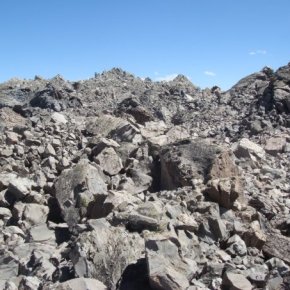
The eruption that formed Obsidian Dome, which is over a mile long and 300 feet high, took place only 550-600 years ago which is yesterday in geologic terms:

obsidian-dome

It’s harder to climb than it looks, but it is certainly not impossible – just slow:

obsidian-dome-1

obsidian-dome-2

obsidian-dome-3

The view at the top is worth it:

obsidian-dome-4

obsidian-dome-5

That’s Mono Lake off in the distance:

obsidian-dome-6

obsidian-dome-7

obsidian-dome-8

This is a tough place for life to scratch out an existence:

obsidian-dome-91

obsidian-dome-10

obsidian-dome-11

These Spanish tourists showed up as I was leaving and were afraid to climb the face of the Dome.  So, I had to stick around a little longer to show them how it was done:

obsidian-dome-12


Inside an Afghan Opium Market

opum-poppies

Inside an Afghan opium market
By Bilal Sarwary
BBC News, Shaddle Bazaar, eastern Afghanistan

Travelling on Afghanistan’s main Jalalabad to Torkham road, you eventually arrive at Shaddle Bazaar, a market of around 30 shops in the eastern province of Nangarhar, on the border with Pakistan.

At first glance, it looks like any other normal market offering everyday goods.

But in reality, this is one of Afghanistan’s biggest opium markets.

AFGHANISTAN-ECONOMY-CURRENCY

Farmers from Nangarhar and other adjacent provinces bring opium to Shaddle to sell. Much of it comes from Nangarhar and Helmand – two of Afghanistan’s biggest opium-producing provinces.

Thousands of kilos of opium are bought and sold every day.

Sitting inside the shop tension between the drug dealers is visible – for a few minutes there is hot dispute and shouting over prices and the quality of the opium before the transaction is completed.

There are big scales in the shop, and the assistant weighs the opium on it – Gul Mohammad is busy counting out Pakistani rupees to pay for the opium he has bought from one of his suppliers.

In his mud hut shop he buys hundreds of kilos of opium every day and the smell of it is everywhere.

Outside his shop vehicles come and go – green tea is served constantly for the visitors.

But you do not have to study what is going on too closely to notice the unusual – a man carries a big bag full of hundreds of thousands of Afghanis.

The dealers all carry pistols which they say is for their own protection.

Customers enter the shop bringing opium packed secretly, which they refer to by its nickname as maal. They are constantly on the look-out for government informers.

Some villagers, like 18-year-old Abdullah Jan, have to walk for hours before reaching Shaddle. The tiredness on his face explains it all – if he is stopped by government agents or bandits he would lose money that feeds his family for the entire year.

“I left at four in the morning and got here after four hours. I have brought 10kg of opium from my fields to sell.”

After a hard bargain with Gul Mohammad Khan, the opium dealer, he is getting the equivalent of $1,400 – more than he can get for any other crop. He is one of hundreds of people who travel to Shaddle bazaar to sell and buy opium.

From here the opium is taken to the nearby mountains and villages in the border areas to heroin labs set up by local drug dealers, where it is processed into heroin.

Eventually, it will hit the streets of Europe.

The market first began to sell opium openly under the Taleban regime after they permitted the cultivation of poppies.

After the fall of the Taleban in 2001, the market has been raided several times but it has re-opened again and again.

In recent months, Afghanistan’s elite anti-drug force has raided the bazaar with the help of foreign forces in the country – they made arrests and seized opium and heroin in large quantities. But they did not succeed in closing down the bazaar indefinitely.

Last year, Afghanistan’s poppy production reached record levels.

The US state department’s annual report on narcotics said the flourishing drugs trade was undermining the fight against the Taleban.

It warned of a possible increase in heroin overdoses in Europe and the Middle East as a result.

Poppy production rose 25% in 2006, a figure US Assistant Secretary of State Ann Patterson described as alarming. Four years after the US and its British allies began combating poppy production, Afghanistan still accounts for 90% of the world’s opium trade.

The US has recently given the Afghan government more than $10bn in assistance, but most of the money will be spent on security rather than encouraging alternative sources of income.

For 45-year-old Gul Mohammad Khan being a opium trader is his way of surviving.

“If we had roads, clinics, factories and if there were job opportunities I would not do what I am doing now,” he said.

For the past 10 years Mr Mohammad has seen many regimes and local officials come and go. His shop has been raided many times but he has never been arrested.

Inside, I am shown various qualities of opium and other raw material that are used to make heroin. Current prices are anywhere from 10,000 Afghanis ($201) for a kilo of dry opium – that is the best quality – to around 5,500 Afghanis ($110) for wet opium.

According to officials, the mafia is powerful and strong.

“They are so strong that we sometimes find ourselves outnumbered fighting them,” says Gen Daud Daud, the deputy minister of interior in charge of counter narcotics.

“In these mountains of Achin district and other border villages they have everything from heavy machine guns, rocket-propelled grenades and of course better vehicles and more money than we do.”

Haji Deen Gul – who is selling 20kg of opium – is critical of the Afghan government and the international community for targeting the farmers. Instead he wants the traffickers to be targeted.

“They should target the ones who are selling the heroin to Western countries. I sell my opium to feed my family and from my heroin they can even make medicine. When I have water and roads provided to me, I will stop growing poppies.”

Before I leave Gul Mohammad Khan’s shop, he tells me selling opium is not ideally the trade he wants to be in.

“I don’t want my children to be in this trade and I hope that some day the world will help us. Only then can we stop the opium trade.”

The Most Dangerous Place in Rome

Cruising into Rome one afternoon, Ele decided to show me a new (well, new for me) neighborhood along the Tiber River:

n563903375_1099255_440

Traffic was very backed up along the route we were on, but, hey, it’s Italy and such things are expected. However, as we advanced we came across this motorcycle accident pictured below and realized the source of the traffic headache.

However someone’s misfortune is almost always another’s gain and this time was no exception – Ele was able to slide into an outstanding parking space right in front of the accident scene that others were overlooking by gawking at the spectacle:

n563903375_1099254_85

We went around the neighborhood for several hours and returned to find the police still at the scene of the accident. Italy is inefficient, but this surprised even me. I mean the guy wasn’t killed or even that seriously hurt:

n563903375_1099297_6469

However, upon further observation, it became clear that we were, in fact, observing a new accident in the exact same location. In fact, you can even see the skid marks from the motorcycle under the car that caused the accident below. I mean it is literally in the exact same spot:

n563903375_1099298_6856

However, this accident also involved us as our vehicle was struck as well. The driver of the car below claimed he was driving down the street when his tire just blew out and the vehicle spun out of control, striking another car, and then smashing into Eleonora’s car. (Eds. note – On two separate occasions I have had a tire blow out under extremely adverse circumstances, but with very different results. I am more than slightly skeptical of the story presented by the at-fault driver, but whatever the fuck):

n563903375_1099296_5986

Exchanging insurance information with the involved parties. Eleonora’s wounded car is on the left:

n563903375_1099333_2109

The kid is the one that was driving the car. His mother (the woman in the picture) showed up later:

n563903375_1099334_2443

Back at home, Eleonora describing the carnage and destruction of the accident to her mother:

n563903375_1099336_3104

So, two catastrophic accidents on the exact same spot as were arriving and departing. Steer clear of this Roman, one square meter danger zone (unless you’re looking to collect some insurance money).

Visiting Pul-i-Kumri, Afghanistan

After departing Bamiyan, we headed up north to Pul-i-Kumri…

Arriving in Pul-i-Kumri , where else could we spend the night but where “respectable guests” stay? Unfortunately, the guests were far more respectable than the hotel:

n563903375_855884_9975

The street in front of the hotel, as usual, was filled with men trying to sell all manner of goods and services. Such as this man below offering shoe repair services:

n563903375_855885_260

However, as evidenced by the home below, some individuals are certainly not stuck selling trinkets on the street. Pul-i-Kumri is along one of the Afghan smuggling routes:

n563903375_855886_9210

Belfast, Northern Ireland – Bombs and Bullets Tour

n563903375_1163031_7672

****

I visited Ireland with my mother almost twenty years ago. It was a good trip, but it didn’t include Northern Ireland. At the time, Northern Ireland was spoken of in a lowered voice and usually described as follows – “nothin’ up there ‘cept bombs and factories.” Naturally, this made me want to visit.

This desire was only intensified by my subsequent education about the conflict in the North and by the many pictures and stories splashed across the media depicting the violence between Catholics and Protestants and Loyalists and Republicans. When Brandon and I recently discovered that we had some Irish blood in us, I knew I had to visit this former “war zone.”

Eleonora never says no to a trip and so we found ourselves in Belfast on the first open weekend we had. E and I started by hiring a local guide named Ken Harper. It only cost us 25 pounds and this is the way to go for the best of the “Bombs and Bullets” tour because the locals know where all of the best murals and other things you want to see are – things you just wouldn’t know where to find if you are not from the area. Also, the guides can give you great background information and answer any questions you might have about symbolism in the murals and such.

****

The three of us headed out to Falls Road first. This is the Catholic/Republican area. On the way, we passed Divis Tower which is a famous (or infamous depending on your perspective) condo highrise that until very recently had its top three floors commandeered by the British Army as an observation post to keep an eye on the restive Catholic Republicans:

n563903375_1163000_8465

A mural wall in the Falls Road area… The murals are kept up to date and so the focus has drifted from the conflict in Northern Ireland to more current events.  Such as support for Cuba and opposition to the absurd sanctions the United States still maintains:

n563903375_1163001_8718

Or for my old Basque buddies in ETA:

n563903375_1163002_8975

Bush gets no love – even in Northern Ireland:

n563903375_1163004_9588

This mural is about the present (as of this writing) fighting taking place in Gaza between Hamas and the Israeli military. The casualty numbers were accurate to within a few hours at the time I took the picture. I told you they kept the murals up to date:

n563903375_1163005_9860

This is one of the pro-I.R.A. murals. Margaret Thatcher is the one wanted for murder:

n563903375_1163006_125

A view of a “peace wall” separating the Catholic and Protestant communities – more on that later:

n563903375_1163007_4451

The famous Bobby Sands mural on the side of Sinn Fein headquarters – While in prison for I.R.A. activity, Bobby Sands was elected to the Westminster (UK) Parliament for 25 days, though he never took his seat or the oath. His term was cut short by his death from a hunger strike. Nine other IRA and Irish National Liberation Army (INLA) members who were involved in the 1981 Irish Hunger Strike died after Sands:

n563903375_1163009_1009

Sinn Fein headquarters. Sinn Fein is the political arm of the militant Irish Republican Army:

n563903375_1163010_1279

This memorial plaque is placed over the entrance to the building. Loyalists just walked in and gunned her down one evening:

n563903375_1163011_1559

Four I.R.A. members were killed when the bomb they were constructing in this home prematurely exploded – “died while on active service” the plaque in front of the home reads:

n563903375_1163013_2136

Bombay Road – memorial to I.R.A. “volunteers” as they call themselves:

n563903375_1163014_2418

And, as with all wars, the memorial to civilians has far more names on it:

n563903375_1163015_2706

However, both of the above seem almost insignificant if one considers the daily losses in a conflict like World War II or even a less conventional war like the present conflicts in Iraq or Afghanistan.

We’re still on the Catholic Republican side here. These wire barriers on the back of the homes offer protection against the rocks, firecrackers and occasionally more serious item that comes flying over the “peace wall” from the Protestant Loyalist side on a regular basis:

n563903375_1163016_3038

The “peace wall” was constructed to physically segregate the Catholic and Protestant neighborhoods. It is Belfast’s version of the Berlin Wall. We’re still on the Catholic side of the wall here:

n563903375_1163017_3320

These gates are the only way through the “peace walls” – most are only open Monday through Friday. This one is kept open all week, but closes every night at midnight. We’re entering Protestant territory now:

n563903375_1163018_3605

Remember the homes with the wire barriers above? This is exactly the same spot on the other side of the wall. The Protestant side:

n563903375_1163019_3885

The Protestant Loyalists are fiercely nationalistic. I’ve never seen so many British flags in one place – even the curbs were painted in the Union Jack colors of red, white, and blue. More British than the British.

“No fockin’ surrender” (to the Irish Catholics) is the slogan in this area and Shankill Road is ground zero for the hardcore Protestant Loyalists. The Ulster Defense Association was formed in 1972 and serves as the political wing of the Protestant Loyalists while the Ulster Freedom Fighters are the soldiers.

Shankill Protestant Boys sign and mural… UVF is an acronym for Ulster Volunteer Force, another Loyalist paramilitary outfit:

n563903375_1163022_4749

The murals and signs in this area tell a slightly different story than the one you get on the Catholic Republican side:

n563903375_1163023_5051

Cromwell, for example, was not a nice guy by most objective standards, but he is a hero in these parts:

n563903375_1163026_6087

n563903375_1163027_6398

n563903375_1163030_73711

n563903375_1163033_8336

Part 1 of this mural:

n563903375_1163028_6710

Part 2 of this mural:

n563903375_1163029_7071

n563903375_1163034_8642

This is a typical, drab neighborhood in the Protestant Loyalist area. You see this and it makes you wonder what they were fighting for… For this?

n563903375_1163032_7993

Orange Hall – protected from attack by wire barriers:

n563903375_1163035_8952

This may look like a fortress, but it is actually just a police station. The tall wire barriers are to protect against attacks from rockets:

n563903375_1163120_4181

This is the public entrance to the police station:

n563903375_1163121_4435

Interesting stuff. However, while informed sources advise me that Armagh and the border areas still have some excitement, if you really want bombs and bullets, go to Afghanistan or Somalia. Belfast is starting to become more tame. They have shopping malls now and are trying to bring in more tourists. So, unfortunately, some of the unique history of Belfast is being lost as “aggressive” murals like the U.F.F. one below are beginning to be painted over:

n1074263456_30059126_8861

And replaced with “friendly” murals like this one of the Titanic (which was constructed in the Belfast shipyards of Harland and Wolff):

n563903375_1163024_5350